I’ve been doing computers for a good minute, but the Scroll Lock key still predates me. There may have been a day when I could have explained what it does, but that knowledge had evaporated until I read Marcin Wichary’s Lock Scroll With a Vengeance. It’s fascinating that the technology that deprecates the Scroll Lock key is… the mouse (and scrollbars and trackpads). Stuff that’s been around. I’m very sure Excel nerds still use love it.
If I must fingersplain a fairly visual concept (I must): scroll Lock, when enabled, keeps the visually selected thing right where it was as you scroll, rather than requiring the selected thing to be butted up against an edge to trigger scrolling movement as it pushes beyond that edge. I think that was a perfect sentence, but your call. Go look at Marcin’s post to see how this effect has actually made its way into modern interfaces, without the key’s opt-in. My take is that if you’re going to do this, the selected item should be very centered so you can see other items in all directions around it. The examples from HBO Max and YouTube just forced the locked item to the other edge. I’d bet a donut it’s so users “see more sooner”.
Welp, we’re getting a smidge reflective about design, here’s a zinger from Barry Prendergast: The worst designer I’ve ever worked with was also the most productive. It’s exactly what you think it is:
This ambitious young designer pumped out more screens in a day than more-experienced designers would in a week. Leadership adored them. They saw the speed, the volume, the ‘beast mode’ energy — and mistook it for value creation.
It didn’t go well. The lesson?
Good designers slow down when it matters. To clarify the problem. To align with their team. To create outcomes that matter.
I can feel how really talented designers at big orgs are, especially feeling the AI anxiety. Whippin’ out screens ain’t it, which is what AI (and, apparently, particularly energetic and misguided junior devs) are good at. Real design has always been a much more nuanced affair. Jem Gold hits it nicely in Design Is How It Tastes with a banger subhead:
If our design specs only tell models what the interface is made of, they have already forgotten what the interface is for
I admit I’m very impressed at what coding agents can do these days, but I remain skeptical that AI can really understand the human experience, a prereq for great design. At the moment, AI is headed for the more rote instructions-following output:
A few months ago, Google Labs released DESIGN.md. The idea is sound: codify your design ethos in a single markdown file so that coding agents can implement it consistently. Write it once, ship it everywhere. Portability matters because interfaces are increasingly built by or with agents.
But read a typical DESIGN.md and you will find language like this:
Use 8px radii. Use a neutral palette with a pink accent. Buttons should have primary and secondary states. Cards should have subtle borders.
Useful, but thin. It describes the produced object. It does not preserve the intended encounter.
I used the word “great” design above. A worthy distinction. Certainly AI can poop out generic but decent design. I see live design work powering successful companies regularly that would probably benefit from letting an AI loose on their pages. Bringing up the average bar is probably a good thing for the web. But great design remains a human endeavor. CodePen Alum Jake Albaugh opens his Design is the work article with:
We’re in a moment where it has never been cheaper or faster to build something convincing.
There is all this stuff we know that is absolutely vital to what we build. Jake lists a small handful of that stuff:
AI doesn’t know your constraints. It doesn’t know your strategy. It doesn’t know what moment in the market you’re in, what your team is trying to prove, or what your customers actually need versus what they’ve said they want. The expectation — the definition of what good looks like — is something only you can provide.
Blech enough AI for one Chris’ Corner.
How about a nice little design lesson from Jono Hey:
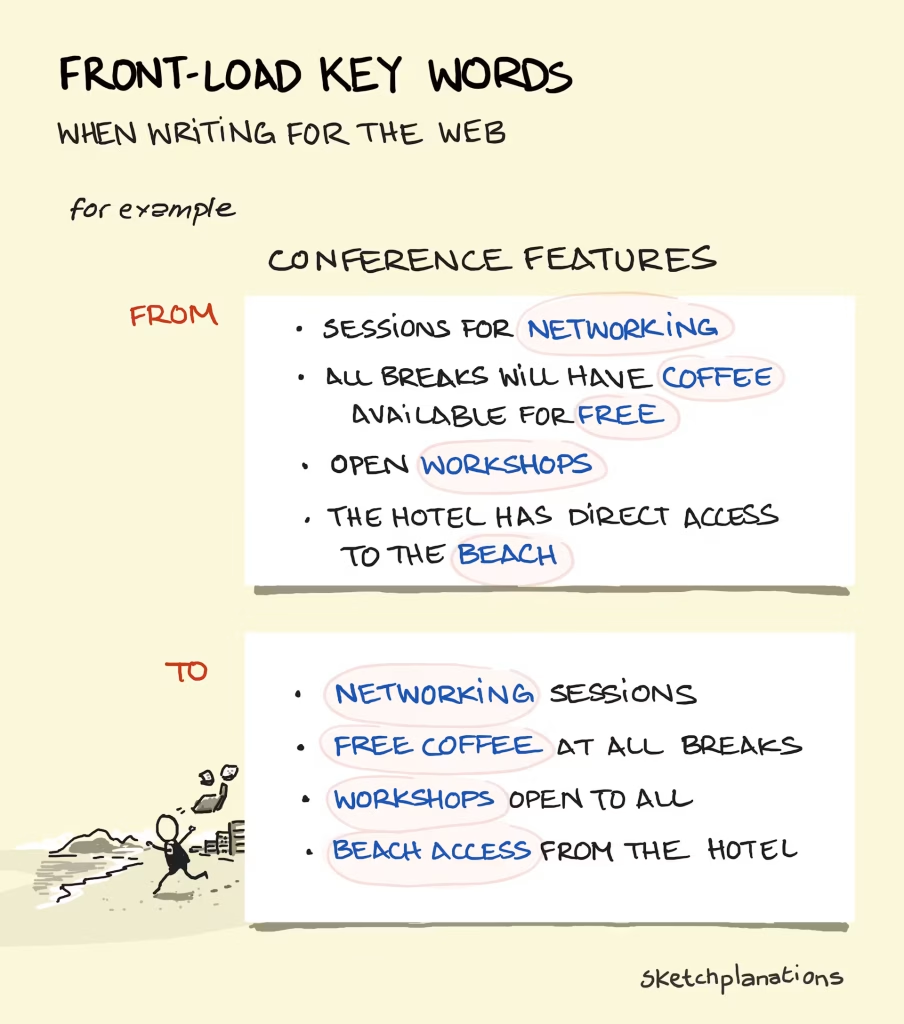
Writing, you say? Word choice is absolutely a part of design. Great design, anyway.
I’ll leave you with Design. Regret. Confess. — a site for all you designers out there to share your profession disasters, then commisurate through reading others.
I once copied a logo from Logos That Slap for some concept sketch and it got approved.
lol I mean AI copies, but humans copy.